Tuesday, April 21, 2015

After endless snow, spring may be here.

Welcome to spring 2015! If we've been a little slow in communicating, we've had pretty good reason. Record breaking snowfalls this winter. Really. 
 We spent a lot of time shovelling snow off greenhouses, making paths to the greenhouses, wood furnace, etc. But it's finally almost all gone, and we are welcoming spring.
The hellebores, fresh out of cold storage, are bursting into bloom already. 
In just a few weeks, there will be magnolias in bloom, too. 

Rob has started seeding in the greenhouses with herbs, etc (this is obviously from last year! 

He will be at the 11th annual Saltscapes East Coast Expo this coming weekend (April 24-26) 

 The new 2015 catalogue is available for download now, too. The link is in the right margin. Includes a variety of new plants plus some old favourites, like Royalty lilac...
 Stewartstonia azalea, a blaze of glory in late spring...
 Tree peonies galore, in a rainbow of hues--and this year, we also have our first Itoh peony, Bartzella.
Woodland and native plants, conifers, flowering shrubs, hardwood trees, perennials galore...it's all waiting for you at the nursery! We're open now!

Tuesday, March 11, 2014

New Plants for 2014, & our Facebook Page

It's been over a year since we did a blog post, primarily because most of the action these days is on our social media pages: on Facebook, and on Twitter. And while the snow continues to fall on Nova Scotia and it seems winter will never leave us, we've been busy planning for spring. We've just put the finishing touches on our new 2014 catalogue, which you can download for yourself. 

Among the new plants for this year is 'Campfire' rose from the Canadian Artists series. This rose honours Tom Thomson and the Group of Seven, those tremendous artists of yesteryear. 

 We carry a number of plants for the shade garden, including three different Jack in the Pulpit species. This one is commonly known as the Cobra Lily (Arisaema sikokianum)
 We brought in 'Cannon's Double' azalea last year for the first time, and it was extremely popular, so we thought it worth a mention.
 'Lavender Twist' redbud is an early-blooming, small tree with branches and twigs having a drooping, twisted growth habit. It's very attractive to early pollinators, too.
We are really thrilled with this variegated flowering dogwood, 'Akatsuki', which has pink flowers. They contrast far better with the variegated foliage than does the white-flowered form. 
 Our interest in hellebores keeps growing and growing, and so does our list of cultivars. This one is 'Cherry Blossom', and like other cultivars and the native forms, it is attractive to pollinators, too.
For those who love blue flowers, we really recommend blue corydalis (Corydalis elata), which we have found to be very hardy, long blooming, and fragrant to boot. It may go dormant in hot weather like its relatives, the bleeding hearts, but in our climate it keeps growing if it's in moist soil. 
 It's always good to learn about new plants, and while Tricyrtis isn't a new plant, it was new to us and we were convinced to carry it because it is a late bloomer. If you're not acquainted with toad lily, the flowers are much smaller than true lilies, but each plant can bear dozens of them in sprays of blooms.
 We do confess to having a deep and abiding love for all coneflowers--the native ones, the new colours, the singles, the doubles. We brought in a number of Terra Nova Nurseries' cultivars last year and grew them on, so they will be ready to go this spring. Among the varieties we have are 'Firebird' (shown), 'Secret Glow', 'Sunbird' and 'Lilliput.'
 For the past few years, Rob has had lewisia growing in one of his rock gardens. This year, he is offering 'Rainbow Mix', which as the name suggests has a number of colourful varieties. Lewisias are definite stars of the rock garden, demanding excellent drainage.
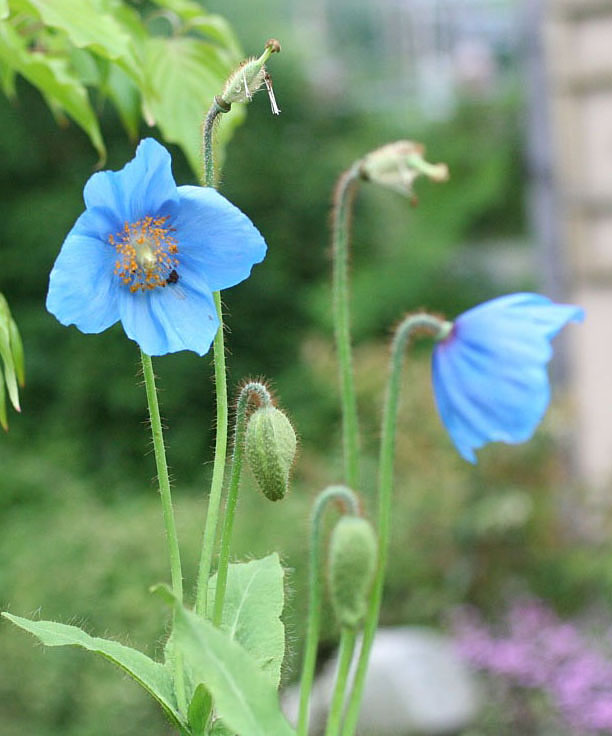
 Of course we have the gorgeous Meconopsis, or blue poppy, which can be a bit of a diva but is worth mollycoddling...
And also for the woodland or shade garden, a selection of different trillium, including this yellow species. And yellow ladyslippers, too!
That's just a few plants to get you interested...do find us on Facebook to get the latest information. We will be at Saltscapes Magazine's Expo again this year, next month (April 25-27, Exhibition Park, Halifax). Hopefully by then the snow will be gone and spring will have finally found us.

Friday, January 25, 2013

To Warm our Spirits, New Plants for 2013

It's winter, and here in Nova Scotia we're in the grasp of a frigid spell, when only a few short days ago we had temperatures that were springlike. How do we gardeners cope with winter if we don't flee to warmer climes? 

If you run a nursery, you spend time planning your new catalogue, ordering new plants, and preparing for the arrival of spring. We are in the process of developing our 2013 Baldwin's Nursery catalogue, and thought we'd return to the blogging world with a few of our tempting plants for this coming season.  

With the popularity of the blue poppies we had last season, we will have quite a few more of them this year. 
Our nursery is known for its diverse selection of rhododendrons and azaleas, including some of our own hybrid seedling crosses. We are bringing in some new cultivars this year, however, including the striped azalea 'Ribbon Candy', 
 And the dazzling 'Cheerful Giant', a double-flowered deciduous azalea.
 We all love blue spruces in our conifer plantings, but how about a blue pine? This is Pinus flexilus 'Extra Blue', a roughly-pyramidal, blue-needled pine that can reach as much as 50 feet tall.
 There is something exotic and lush about flowering cherry trees, and we're pleased to offer a great specimen tree, the Japanese weeping flowering cherry, Prunus 'Kiku-shidare-zakura'. This is grown for its ornamental value, not for its fruit, but we do carry a number of great fruit trees.


Goji berry has exploded in popularity in recent years, being touted as a fruit loaded with health benefits. Also sometimes referred to as Wolfberry, this native of the Himalayas has significant amounts of vitamin C and Beta-carotene, and the fruits are somewhat tart in taste. We're keen to see what local gardeners think of this plant. 
 We love perennials that do double-duty, having great foliage as well as wonderful flowers. Pollinators love ligularias, and we are excited to carry this chocolate-foliaged form, 'Midnight Lady'.
 While some of the coreopsis varieties released in recent years haven't performed all that well, we find the best way to grow them is to give them excellent winter drainage. This variety is 'Sweet Dreams', with a cheerily rose-coloured flower.
We carry a number of wonderful woodland plants, ideal for planting in shady conditions. This is one of the liverworts, Hepatica--we will be carrying two species this year...
 And this is the Hart's tongue fern, one of a number of fern species we have on offer.
 We are pleased to have a section of oddities/zone pushers for this year's growing season, including such delightful choices as prickly pear cactus (Opuntia). We have these in several colours, and they work brilliantly in your alpine or rock garden.

That should be enough to warm your spirits for a day or so. To keep up more regularly with what we're doing, please like our Facebook page, where we do (usually) daily posts. We should have our new catalogue available as a pdf download in a few weeks time.

Tuesday, September 4, 2012

Got to get ourselves back to the garden...

 With the coming of cooler temperatures, especially at night, and some actual precipitation, we can safely get back to gardening. There are plenty of interesting things to plant now to extend your colour season, including Helenium 'Ruby Tuesday', which is a real great pollinator plant.
 Several of us have been discussing the newer cultivars of coneflowers, and comparing notes on how well they are performing after several years of being available. This is Green Envy planted out and holding its green/purple bicolour petals quite well. Some of the containerized ones seem to have lost much of their green colour, and we're wondering if this is a response to the dry conditions we've been having.

Wednesday, August 22, 2012

Monarchs and Viceroys and Ladies, Oh My!

High summer, and the nursery is awash in colour, both from flora and fauna. The rock wall display gardens are still ablaze with colour from coneflowers, rudbeckia, bee balm, sea holly, and more. 
 We found this monarch butterfly chrysalis a few days ago in the nursery. Normally, these are attached to the underside of leaves of various types of plants, but something must have dislodged it. The butterfly inside was still a ways from metamorphosing, as the chrysalis will turn clear before the butterfly bursts out of it.
 Butterfly bush is a great plant for gardeners who want to attract more types of pollinators to their gardens. Here's 'Black Knight' with the unusual and beautiful hummingbird moth sipping nectar from its flowers.
 This is Joe-Pye weed (Eupatorium), which grows natively around here but which is also an excellent plant in the garden. It's a tall plant, and likes moisture, so you will want to situate it in a damp to wet area, and give it space to spread.

There's a butterfly in the top of the flowers that looks like a Monarch, but which isn't. Can you spot the differences?
 Here's a monarch butterfly on buddleia. Monarchs need milkweeds on which to lay their eggs, and the caterpillars eat only milkweeds, but the adults will sip nectar from any number of plants.
This is a newly-hatched monarch adult emerged from its chrysalis, and still inflating its wings. 
 And this is the Viceroy, which is a bit smaller than the Monarch, and which has a solid black bar running across its lower wings, which the monarch doesn't have. Viceroys practice biomimicry: they have evolved to look like the toxic Monarch, which birds know to avoid, even though the Viceroy is not toxic. Monarchs ingest toxins from milkweeds, and birds tend to leave them alone in the caterpillar and the adult stage.
 This is quite the year for butterflies. The hot, dry, sunny weather is ideal for them to be actively sipping nectar, laying eggs, hatching out caterpillars, and continuing the circle of life. These are painted ladies enjoying the purple coneflowers planted along the rock wall.
 The best way to attract lots of butterflies to your gardens? Plant flowering perennials, shrubs and trees that they like, and plant them in drifts (lots of one colour at a time) rather than in jumbles of multicolours. You may not want quite this many rudbeckia 'Goldsturm', but these are our containerized rudbeckias, and we group them both for ease of organizing, and to entice the pollinators to visit the 'snack bar' of the flowers.

Other great butterfly plants, aside from those shown in these photos, include Summersweet shrub (Clethra Ruby Spice), Sea holly, Helenium, outhouse flower (Rudbeckia 'Hortensia'), and some of the hydrangeas.

We're closed on Mondays at this time of year, but open the rest of the week 9-5, so do stop by and let us help you design your butterfly garden.

Monday, July 16, 2012

Of Pollinators and Bee Schools

 It's high summer at Baldwin's Nurseries, and everything is bursting out all over. Also, things are quite dry, so we could really use some rain, rain gods. The succulents in these old Crocs don't mind the heat or dry weather...
 And neither does Sedum 'Angelina', shown here preparing to flower. We like the flowers (as do the pollinators, but some gardeners feel they take from the beauty of the plant. What do you think?
 Speaking of dry weather, here's a terrific plant that does well in hot, dry weather, (once it's established, of course. This is Globe Thistle, (Echinops ritro), a steely-blue flower that attracts all kinds of pollinators, from bees to hummingbirds.
 Are you growing ferns in your gardens? Whyever not? They aren't just for shade or for wet areas--some of them are quite tolerant of sunny and even somewhat dry conditions, like this lady fern. They're also deer resistant, which is a plus in our wildlife laden world.
 The lavenders are great bee-magnets too. We have had a number of hummingbird moths around this summer, and we're hearing the same from other gardeners, too. We don't know why the apparent rise in population other than more gardens are being planted to be pollinator friendly.

 Grasses tend to be drought tolerant once they are established, and this particular one is unique in that it's one of the few pennesetums that is hardy in our region. 'Karley Rose' has dainty flower heads of a rosy pink, and they look striking planted out with something with similar colouring...
 ...Such as Rudbeckia 'Cherry Brandy.' This variety of Rudbeckia is sometimes short-lived as a perennial, but we do know a number of gardeners who have gotten it through the winters just fine. It's such a striking colour, we can't resist it!
The Echinaceas are coming on strong, and they are brilliant shots of colour from now til frost--providing you remember to deadhead them as the flowers fade. They're great bee and butterfly plants, too. 

We put a couple of beehives in here at the nursery this spring, and they've been fascinating to watch. We're learning more about the bees all the time, and we get questions from others who are interested in learning more as well. As a result, we're having a 'bee school' on Saturday, August 11 (rain date Aug 12) for a maximum of 20 people, here at the nursery. The cost is 25.00 and includes lunch, and the workshop runs from 10-2. Bring along a small jar to collect your own honey, and come find out all the 'buzz' about beekeeping. Contact us at the nursery for details or to reserve your spot.